General
Version, license link, appearance, and start page.
 Scott's TCG Binder
Settings is where the app-wide defaults live: the start page, the condition applied to new cards, the camera used for scanning, and the pricing sources.
Mac
shot desktop-settings-general · seq 23 · assets/screenshots/original/desktop/0023.png
iPhone
shot iphone-settings · seq 123 · assets/screenshots/original/iphone/settings.png
Additional platform screenshots will be added as this guide is expanded.
Version, license link, appearance, and start page.
Quantity, condition, language, storage location, collection view, items per page, and the rule for adding an existing card.
Default Camera, Connected or Disconnected, Test Camera, and Resume After Scan. Auto-capture and capture delay are not in this version.
Settings uses its own category list: General, Collection, Scanner & Recognition, Camera, Condition Analysis, Pricing, Cloud Sync, iPhone Catalog, Advanced, and Developer. Light mode is labeled not available yet. Advanced and parts of Developer were not fully captured.
Mac
shot desktop-settings-general · seq 23 · assets/screenshots/original/desktop/0023.png
iPhone
shot iphone-settings · seq 123 · assets/screenshots/original/iphone/settings.png
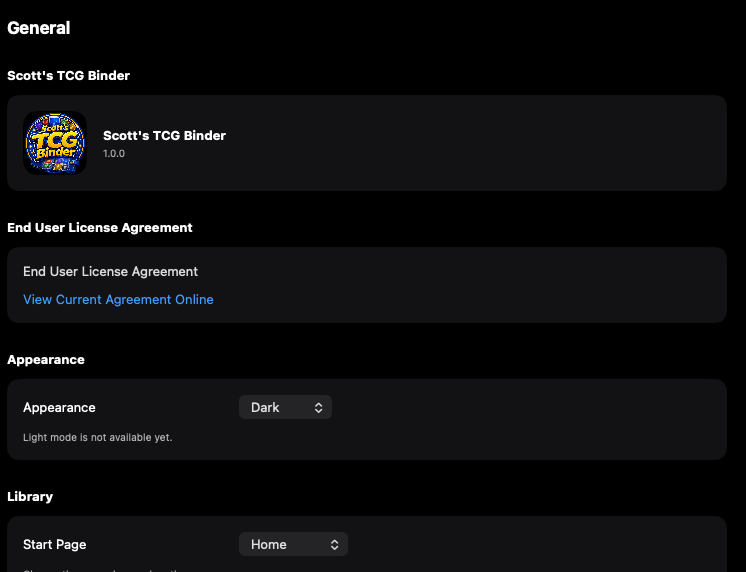
Appearance and the start page are app-wide defaults.
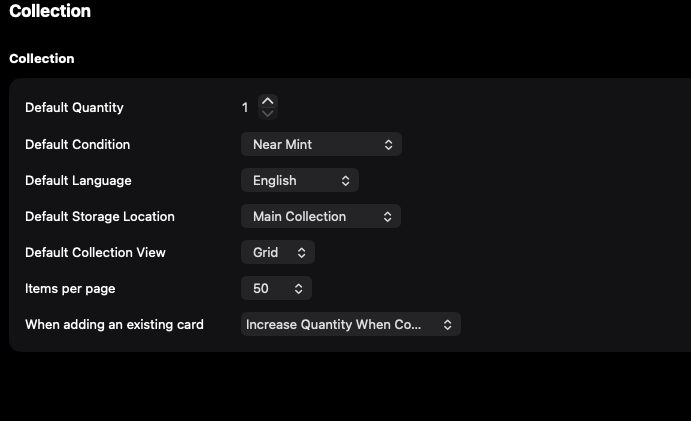
Defaults apply when a card is added, including quantity and condition.
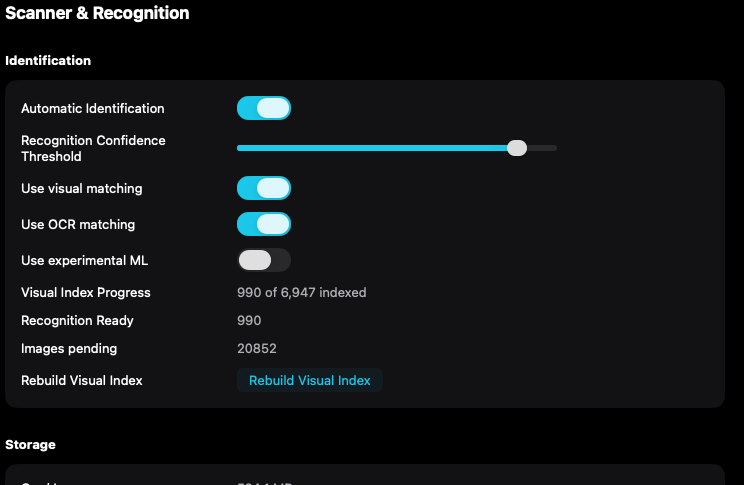
Visual matching and text matching can be reviewed before a scanning session.
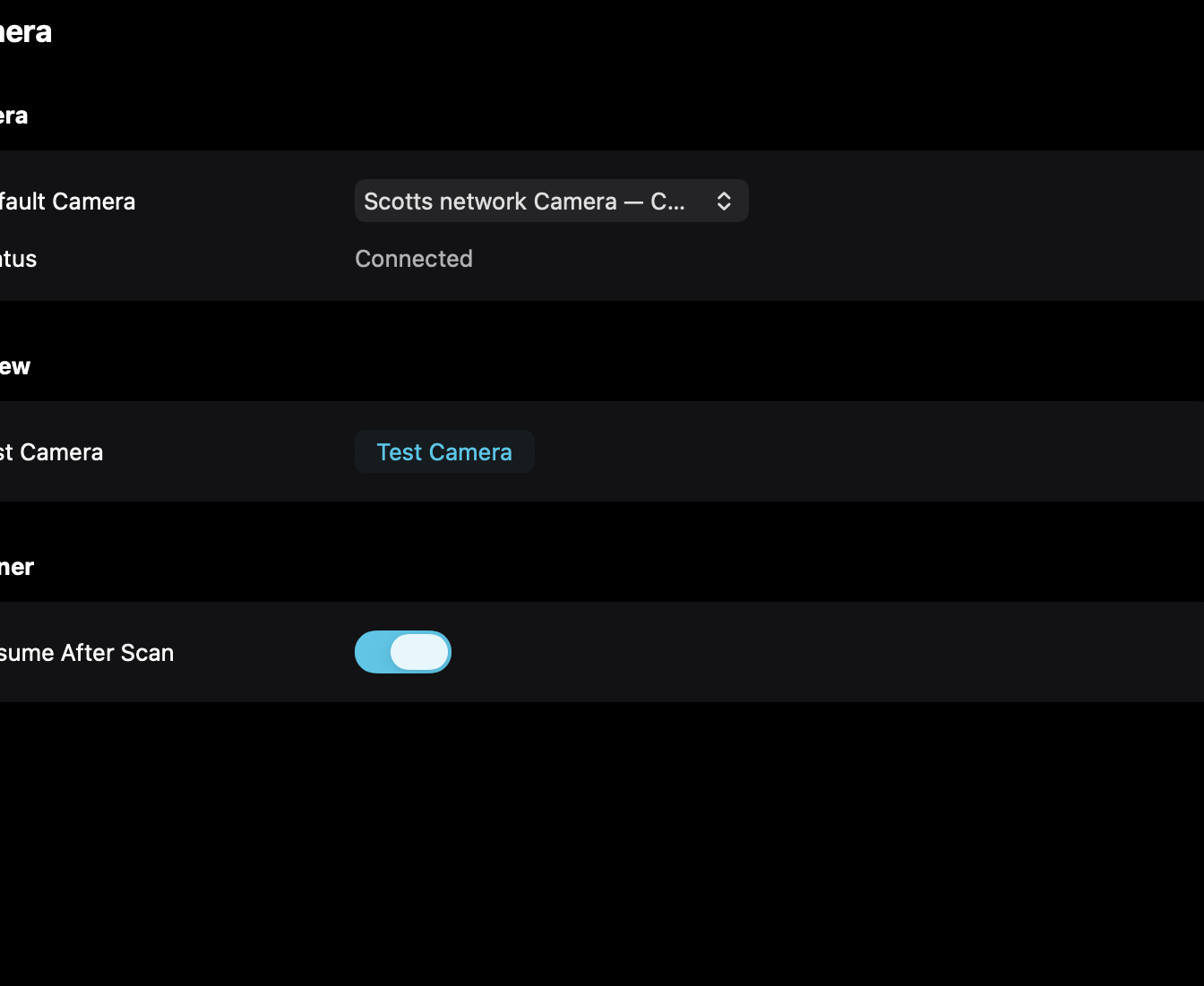
The camera list uses the device name macOS reports, including Continuity Camera.
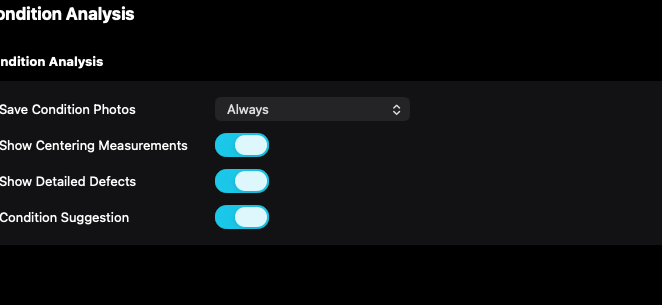
A condition suggestion is separate from the condition saved on the collection record.
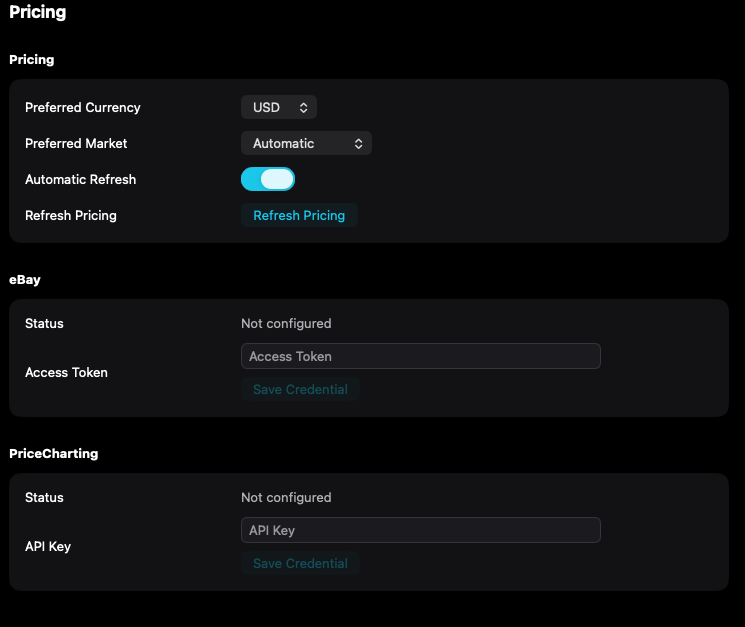
Currency, market, and provider credentials control where available prices come from.
Mac, iPhone, and iPad share the same collection model. Each platform presents those records in a layout that fits its screen.
Settings opens as a sheet. There is no Continuity Camera list on this screen.
Operational steps, controls, and the annotated screen.